
Something strange is happening to businesses that invested heavily in SEO. Their rankings are climbing. Their impressions are up. But their phones aren’t ringing.
This isn’t a fluke. It’s a fundamental shift in how search works—and most businesses haven’t adjusted their strategy to match it.
The Traffic Paradox: More Visibility, Fewer Clicks
A 12-month study tracking 210 marketers revealed a troubling pattern. From June 2025 through May 2026, search visibility and impressions grew by 50%. Organic traffic, meanwhile, declined by 25% . The two metrics that once moved together have completely diverged.
The culprit? AI Overviews. Google now answers questions directly in search results, and when those AI summaries appear, clicks to websites drop dramatically. A randomized field experiment found that organic clicks fall by nearly 40% when an AI Overview appears . For the top-ranking page, click-through rates have dropped by 58% compared to pre-AI Overview levels .
This means the old SEO playbook—rank high, get clicks, convert visitors—is broken.
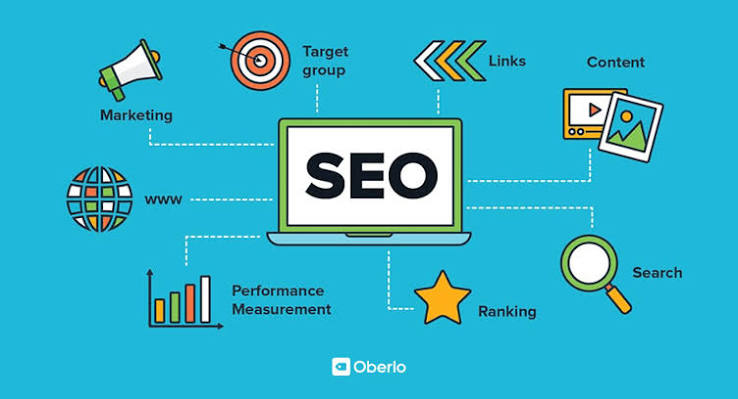
Why Traditional SEO Tactics Are Failing
The Keyword Focus Is Outdated
Google’s own data shows that AI search users have moved past keywords. The average AI Mode query is now triple the length of a traditional search query . People aren’t typing “plumber Birmingham” anymore. They’re typing, or saying, “I have a leaking pipe under my kitchen sink that’s been dripping for two days—who can fix it today?”
If your content is optimized for three-word keywords, you’re invisible to the way people actually search now.
Thin Content Gets Skipped
AI systems don’t read your entire page. They scan for extractable, self-contained answers. If your service page buries the answer to “What do you do?” in paragraph 14 under a subhead about your company history, the AI will skip past you and cite a competitor who delivered the answer in plain English near the top .
Rankings Don’t Equal Revenue
Holding the #1 position for a keyword that never brings customers does nothing for your business. A position #4 ranking for a high-intent local search can quietly outperform a vanity #1 for an informational query that brings zero buyers .
What Actually Works in 2026
Answer-First Content Structure
The pages that win in AI-driven search are designed for extraction. For every important question your customers ask, write a clear two-sentence answer. Put it near the top of the relevant page. Then let the deeper content live underneath for readers who want more .
This isn’t about dumbing down your content. It’s about respecting how both humans and AI systems actually consume information.
Build Authority Beyond Your Own Website
Here’s what most businesses miss: AI systems aren’t just reading your site. They’re synthesizing answers from directories, review platforms, forums, press mentions, and industry blogs. Research shows that 88% of AI summaries cite three or more sources .
If your business exists only on your own domain, the AI has nothing to cross-reference. It doesn’t know whether to trust you, so it recommends someone it does know. Getting mentioned on trusted third-party platforms isn’t just link-building anymore—it’s the foundation of AI visibility .
Optimize for Conversational Queries
Long, specific queries trigger AI summaries far more often than short ones. Searches of 10 or more words trigger AI summaries roughly 53% of the time, compared with just 8% for short queries .
This is actually good news for small businesses. You know your customers personally. You hear their real questions, their objections, their specific situations. That firsthand knowledge is more valuable than any keyword tool output.
The Measurement Problem Nobody’s Talking About
Here’s the uncomfortable truth: only 14% of marketers are currently tracking whether their brand appears in AI-generated search results, even though 89% of brands are already being cited there . Most organizations are optimizing blind.
The metrics that matter now aren’t just rankings and clicks. They’re:
- Citation share: How often AI systems cite you as a source
- Assistant recall: Whether AI gets your facts right
- Branded search volume: Are people searching for your business by name after encountering AI answers?
Your Next Step
The shift to AI-driven search isn’t a temporary disruption. It’s the new operating environment. The businesses that adapt—by creating extractable content, building third-party authority, and measuring AI visibility—will capture the customers that traditional SEO now misses.
The question isn’t whether to adjust your strategy. It’s whether you’ll do it before your competitors do.
Ready to see how your brand actually performs in AI search? Globosoft’s SEO specialists can audit your current visibility across AI platforms and traditional search, then build a strategy that gets you cited, not just ranked. Contact us today for a Free Consultation and find out where you stand in the new search landscape.